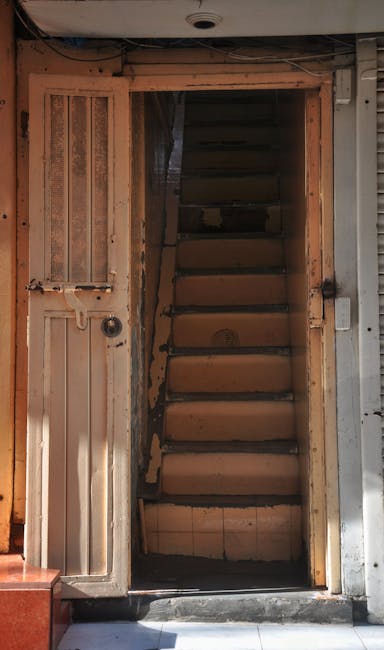
South Quay E14 removals for flats with narrow staircases
If you are moving out of a South Quay E14 flat with a tight stairwell, awkward corners, or a lift that is smaller than your sofa, you already know this is not a normal move. South Quay E14 removals for flats with narrow staircases call for a bit more planning, a steadier hand, and frankly, a good dose of patience. The good news? With the right approach, the whole thing becomes much more manageable than it first looks.
In this guide, we'll walk through how these moves work, what makes them tricky, where people usually get caught out, and how to prepare your flat so the day runs smoothly. You'll also find a practical checklist, comparison table, and answers to the questions people actually ask before moving day. If you're comparing providers, a good place to start is the company's pricing and quotes page, plus their wider removal services information so you know what is and isn't included.
Table of Contents
- Why South Quay E14 removals for flats with narrow staircases Matters
- How South Quay E14 removals for flats with narrow staircases Works
- Key Benefits and Practical Advantages
- Who This Is For and When It Makes Sense
- Step-by-Step Guidance
- Expert Tips for Better Results
- Common Mistakes to Avoid
- Tools, Resources and Recommendations
- Law, Compliance, Standards, or Best Practice
- Options, Methods, or Comparison Table
- Case Study or Real-World Example
- Practical Checklist
- Conclusion
- Frequently Asked Questions
Why South Quay E14 removals for flats with narrow staircases Matters
South Quay is full of modern apartments, riverside developments, and compact layouts where the route out matters just as much as the items you are moving. A flat can look perfectly straightforward at first glance, then the stairwell tells a different story. Narrow turns, low bannisters, awkward landings, and shared hallways can all slow everything down.
That matters for three simple reasons. First, tight access increases the risk of scratches, knocks, and strained backs. Second, it changes the type of vehicle and crew you need. Third, it affects time. A job that would be simple in a ground-floor home can take longer in a second- or third-floor flat with no roomy lift. Not a disaster. Just a different job.
In practice, this is where experience really counts. A removal team that has handled flat removals before will think about turning radius, parking distance, carry routes, and whether a wardrobe can safely be taken apart before it even reaches the staircase. That is the kind of detail that keeps a move calm rather than chaotic.
Expert summary: Narrow staircases do not automatically make a move difficult, but they do make planning non-negotiable. The more carefully the access is checked beforehand, the less stressful moving day becomes.
How South Quay E14 removals for flats with narrow staircases Works
The process usually starts with a short access assessment. This can be done from photos, a video walk-through, or a practical discussion about stairs, lifts, parking, and bulky furniture. A good mover will want to know what needs moving, which floor you are on, whether the stairs bend sharply, and whether any items will need dismantling.
From there, the plan is built around the building, not the other way round. For example, a sofa might be carried upright on a stairwell with one person guiding at the top and another supporting from below. A wardrobe may need to be emptied, wrapped, and possibly taken apart if the staircase width or landing size makes the full piece unrealistic. Simple enough in theory, but the details matter.
On the day, the team will normally arrive with protective materials such as blankets, straps, wraps, and floor protection. If access is especially tight, they may bring a smaller vehicle or more compact carrying setup. If you have selected a broader man and van style service, that can be especially useful for smaller flats, student moves, or partial removals where flexibility matters more than volume.
The goal is not brute force. It is control. Controlled lifting, controlled angles, controlled pacing. Truth be told, that is usually what saves time.
Key Benefits and Practical Advantages
Choosing the right moving setup for a flat with narrow staircases gives you more than just transport. It gives you a cleaner process from start to finish. Here are the main advantages people notice.
- Less risk of damage: Good planning reduces the chance of scraping walls, chipping skirting boards, or marking furniture.
- Safer lifting: A carefully managed carry route reduces awkward twisting and sudden movements.
- Better time control: Access issues are factored in before moving day, which helps avoid long delays.
- More suitable vehicle choice: A small or medium van may be a better fit than a larger lorry if parking and access are tight.
- Less stress for you: You are not trying to guess whether the wardrobe will fit on the staircase at 8:30 in the morning.
There is also a hidden benefit people often forget: clearer communication. Once the access problem has been discussed properly, everything else becomes easier to organise, from loading order to arrival times. That's a big relief when you are juggling keys, utility readings, and the usual moving-day mess.
Who This Is For and When It Makes Sense
This kind of move is a strong fit if you are in one of the following situations:
- You live in a flat with narrow internal stairs or a tight stairwell.
- Your lift is too small for larger furniture, or it is unreliable.
- You are moving a few floors up or down in a block where access is restricted.
- You have large items such as wardrobes, beds, a piano, or heavy appliances.
- You need a straightforward local move without a huge vehicle.
- You want help that feels more practical than formal, especially for smaller homes.
It also makes sense for people moving into or out of South Quay while dealing with time pressure. Students, young professionals, shared households, and renters between tenancies often need a service that is flexible and quick to organise. In those cases, a same day removals option can be useful if availability allows, though it is always best to book ahead where possible.
Sometimes the answer is not a full removal lorry at all. Sometimes it is a smaller van, a lighter crew, and a sensible plan. Simple idea. Big difference.
Step-by-Step Guidance
Here is a practical way to handle a narrow-staircase move without turning it into a saga.
- Measure the awkward bits first. Check staircase width, landing space, door frames, ceiling height on turns, and the size of any lift.
- List your larger items. Sofas, beds, mattresses, wardrobes, desks, mirrors, and appliances should be identified early.
- Decide what can be dismantled. Flat-pack furniture is easier to move in sections. Some items are simply not worth forcing.
- Sort parking and access. If the van cannot park close enough, the carrying distance may become the real problem.
- Pack systematically. Use strong boxes, label breakables, and keep essential items separate.
- Protect shared areas. In apartment buildings, hallways and stairwells should be kept tidy and protected where possible.
- Load in the right order. Heavier, awkward, and fragile items should be planned into the van layout before anyone starts lifting.
- Do a final sweep. Check cupboards, balcony storage, under beds, and behind doors. You would be surprised how often chargers and keys get left behind. Happens all the time.
If you are still gathering supplies, it is worth reviewing packing and boxes and, if the move is larger than expected, packing and unpacking services can take a lot of pressure off the day itself.
Expert Tips for Better Results
From a practical removals point of view, a few small decisions make a big difference.
- Use smaller boxes for heavy items. A box full of books may look tidy, but it is a brute to carry down stairs.
- Wrap corners and edges. Bedframes, tables, and mirrors are often damaged on the corners, not the middle.
- Keep stairwells clear. A coat on the banister or a pair of shoes on the landing can become a real trip hazard.
- Tell the mover about fragile pieces early. A last-minute "oh, and there's also a glass cabinet" is not ideal.
- Plan for timing buffers. In South Quay, parking or building access can be slower than you expect.
One thing people rarely ask, but should: do you really need that item moved as-is? Sometimes partial dismantling is the difference between a smooth carry and a painful argument with geometry. No joke.
For heavier items that are being replaced rather than moved, you may also find furniture removals or furniture pick up useful if you are clearing space before settlement day.
Common Mistakes to Avoid
Narrow-staircase removals usually go wrong for very ordinary reasons. That is the annoying part. The problem is rarely dramatic; it is usually a missed measurement or a rushed assumption.
- Assuming the sofa will fit because it fit in the old flat. Different stair geometry can change everything.
- Ignoring the stairwell turn. A piece can be shorter than the stair run but still impossible to pivot.
- Packing boxes too heavily. Small boxes are your friend here, even if they look less efficient.
- Leaving dismantling too late. Furniture taken apart at the last minute often leads to missing screws and extra stress.
- Not checking building rules. Some developments have booking windows, lift protection rules, or time restrictions.
- Booking a vehicle that is too large. Bigger is not always better in South Quay access conditions.
Another quiet mistake is underestimating how tiring repeated stair carries can be. It sounds fine at the start. Then you are on the fourth return trip and the building feels twice as tall. Let's face it, everyone gets a bit more realistic after the first heavy item.
Tools, Resources and Recommendations
You do not need specialist equipment for every move, but the right basics save time and protect your belongings.
| Item | Why it helps | Best for |
|---|---|---|
| Strong small boxes | Keeps weight manageable on stairs | Books, kitchen items, mixed contents |
| Furniture blankets | Reduces scuffs and edge damage | Tables, wardrobes, sideboards |
| Stretch wrap | Holds drawers and doors in place | Cabinets, dressers, chairs |
| Straps | Improves control when carrying awkward loads | Large or heavy items |
| Door and floor protection | Helps preserve communal areas | Shared hallways, entrances, stairwells |
For people moving between homes or combining smaller loads, man with a van and removal van options can be a practical match. If you are moving a whole household, then a broader home moves service may suit you better.
If your move includes a short-term gap between properties, a storage solution can also help avoid rushed decisions. That breathing space can be priceless, especially when completion times slip and the day starts to wobble.
Law, Compliance, Standards, or Best Practice
For this type of move, the main compliance concerns are practical rather than complicated. Safe lifting, careful handling, and respect for building rules matter more than anything else. In the UK, removal work should be carried out with sensible manual handling practices, proper risk awareness, and suitable insurance arrangements where relevant. You do not need a legal lecture, just a mover who takes safety seriously.
That usually means a few straightforward things: checking access in advance, using enough people for awkward items, protecting shared surfaces where possible, and avoiding unsafe carries through narrow or unstable routes. If a piece of furniture is too large or too awkward to move safely, the right answer is to stop and adapt the plan rather than forcing it.
It is also wise to check the company's own safety and insurance information. A transparent provider will make this easy to understand and will be clear about how complaints, payments, and expectations are handled. If you want reassurance on those basics, pages such as health and safety policy, insurance and safety, and terms and conditions are worth reading before you commit.
That may sound unexciting. But honestly, boring paperwork is lovely when the move itself is complicated.
Options, Methods, or Comparison Table
There are a few ways to approach removals for a flat with narrow staircases. The best choice depends on what you are moving, how much help you need, and how awkward the access is.
| Approach | Best for | Trade-off |
|---|---|---|
| Man and van | Small to medium moves, flexible loading, quick local jobs | Less ideal for very large household moves |
| Full removal service | Busy households, larger furniture, more hands needed on stairs | Usually more involved and may take longer to plan |
| Self-move with hired vehicle | Very budget-conscious movers with minimal items | You carry the risk, effort, and timing pressure yourself |
| Storage-first move | Delayed completions, downsizing, or staged moves | Extra step and extra coordination |
For many South Quay flats, a smaller, more agile approach is the sweet spot. It is rarely about moving the most stuff in one go; it is about moving the right stuff safely and without the staircase becoming the main character.
Case Study or Real-World Example
Imagine a one-bedroom flat in South Quay with a narrow stairwell, a compact lift, and a few awkward items: a double mattress, a flat-pack wardrobe, a desk, two chest-of-drawers units, and a glass coffee table. On paper, it sounds simple enough. In reality, the wardrobe may need to be dismantled, the coffee table wrapped twice, and the mattress carried at an angle that only makes sense once you are inside the building.
A sensible plan would start the day before. The mover asks for photos of the stairs, the lift, and the larger furniture. The customer clears the corridor, books the lift if required, and separates essentials into one overnight bag. On moving day, the crew arrives with blankets, wraps, and a van sized for the route. The desk goes first because it is light but awkward. The mattress comes next. The wardrobe is carried in sections, and the glass top is protected before anyone even picks it up.
What made the job work? Not speed, oddly enough. It was sequencing. Each item had a place in the plan. The stairs stayed clear. Nothing was rushed. And the customer did not spend the afternoon standing at the bottom of the stairwell wondering whether the sofa would make it round the bend.
Practical Checklist
Use this checklist the day before your move. It is deliberately simple.
- Measure the staircase, landings, and door frames.
- Confirm whether the lift is usable and big enough.
- Check parking and building access instructions.
- Separate large items that may need dismantling.
- Pack heavy items into smaller boxes.
- Label fragile boxes clearly.
- Protect mirrors, glass, and screen surfaces.
- Clear hallways, entrances, and the route to the door.
- Keep tools, keys, and documents in one easy-to-reach bag.
- Set aside cleaning supplies for the final sweep.
- Confirm timing with your mover and share any building restrictions.
If you want to keep everything tidy at the end of the move, packing and unpacking services can make the process feel far less like a juggling act.
Conclusion
South Quay E14 removals for flats with narrow staircases are all about access, timing, and calm decision-making. If you plan the route, size up the furniture properly, and choose the right kind of moving support, even a tight stairwell becomes manageable. You do not need perfection. You need preparation, honest communication, and a team that respects the building as much as the belongings.
That is really the heart of it. When the move is handled well, the staircase stops being a problem and becomes just another part of the route out. A bit of care goes a long way, and so does a mover who has seen this sort of thing before.
Get a free quote today and see how much you can save.
Frequently Asked Questions
Can removals be done safely in flats with very narrow staircases?
Yes, in many cases they can. The key is to assess the access properly, protect the building, and choose the right approach for bulky items. If something is too large to move safely as one piece, it may need dismantling or a different handling method.
Do I need a bigger van for a South Quay flat move?
Not always. In fact, a smaller vehicle can be better if parking is tight or the load is not huge. The best vehicle is the one that fits the access route and still gives enough space for your furniture and boxes.
What should I measure before booking a removal service?
Measure the staircase width, landing size, door frames, and lift dimensions if you have one. It also helps to note any sharp turns, low ceilings, or tight hallway bends. Those details often decide whether furniture can be carried intact.
Will my furniture need to be dismantled?
Possibly, yes. Large wardrobes, bed frames, desks, and some sofas may need to be taken apart to get through a narrow stairwell. It is better to check this in advance than discover it on moving day.
How can I protect the walls in a narrow stairwell?
Use blankets, corner protection, and careful carrying techniques. Good movers will also plan the route so items do not scrape along painted surfaces. In shared buildings, it is sensible to keep hallways clear and tidy too.
Is a man and van service enough for a flat with stairs?
For smaller moves, yes, often it is. A man and van service can be a very practical choice when you do not have a huge amount to move. For bigger households, a fuller team may be more suitable.
What if my building has strict move-in or move-out rules?
Then it is best to share those rules early. Some developments have booking windows, lift padding requirements, or time restrictions. The mover can only work around those rules if they know about them before arrival.
Can I move on the same day if I get short notice?
Sometimes, yes, if the crew and vehicle are available. That said, last-minute moves are always easier when your boxes are already packed and access details are clear. If you are in a rush, make the call early rather than waiting until the last minute.
What items are hardest to move down narrow stairs?
Wardrobes, sofas, beds, glass tables, and large appliances are usually the most awkward. They are not impossible, but they often need extra planning, careful angles, and a bit more time.
Should I use storage if my new flat is not ready yet?
Yes, storage can be a very sensible bridge if your dates do not line up. It takes pressure off the move and prevents you from making rushed decisions just because completion times have shifted. That happens more often than people expect.
How do I get the most accurate quote?
Give honest details about the building, floors, stairs, lift access, parking, and the size of your larger items. Photos usually help as well. The more accurate the access information, the more accurate the quote will be.
What should I ask before hiring a removals company?
Ask how they handle narrow staircases, whether they offer dismantling support, what is included in the price, and whether they have clear insurance and safety information. A trustworthy company should answer those questions without making it feel awkward.